From AI to self-service: payments in 2026 according to John Kolthof

Payments in Belgium are changing faster than ever. Digital wallets, instant payments, and stricter security requirements have set the tone since 2025, but 2026 brings a new wave of innovation. Transactions will be faster and more secure, but also more personal and almost invisible. For Belgian retailers, hospitality businesses, and service providers, this means both opportunities and challenges. How can they adapt to these changes without losing customers?
John Kolthof, Chief Commercial Officer at CCV, sees a clear shift in the payment world:
In 2026, the payment experience will become invisible and personal. Convenience, security, and speed are no longer extras - they are the new standard. Companies that combine these three pillars will earn customer trust and with it, revenue and loyalty.
Belgian payment market in transition
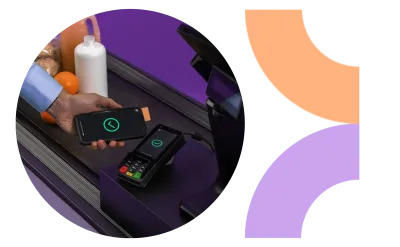
This vision aligns with a series of concrete developments in the payment landscape. The Belgian market is undergoing a major transformation. Mobile payment app Payconiq is disappearing, making way for Bancontact QR - a move that forces consumers and merchants to adapt to a new standard for mobile payments. At the same time, an European player is emerging: WERO. Starting in 2026, this solution will not only enable fast payments but also simplify invoice processing.
WERO
WERO, developed by European banks, aims to provide a uniform, secure, and user-friendly alternative for both physical and online transactions. It positions itself as a counterweight to international giants like Apple Pay and Google Pay and as a solution to the fragmentation of payment methods in Europe.
Role of Bancontact and the Belgian context
Bancontact remains a key player in Belgian payments, with more real-time transactions and strong digital integration. Meanwhile, the National Bank of Belgium is fully committed to innovation, supporting initiatives like WERO and A2A payments. This approach ensures Belgium not only keeps pace with the European payment revolution but even leads in some areas.
Belgians are critical and loyal,” says Kolthof. “If a solution works, they stick with it. Our job is to make sure it always works: fast, secure, and simple.
CCV as a guide through the transition
For payment solution provider CCV, this evolution is crucial. The company ensures retailers and service providers transition smoothly to the new standard by preparing terminals and software for QR payments.
The QR experience will become simpler and more consistent,” says John. “We make sure customers switch easily and immediately see the benefits: less friction, more convenience.
CCV makes payments simple and future-proof. Where others emphasize one element, CCV combines ease of use with strong security and a flexible system. This allows Belgian businesses to embrace new payment methods without overhauling their infrastructure. John summarises:
We turn innovation into an opportunity, not a risk.
Beyond the Payment Moment
According to Kolthof, it’s no longer about the ‘payment moment’ but about a seamless, integrated experience.
Design the experience first, the payment will follow,” he explains. “Companies that enable invisible payments gain time, trust, and repeat purchases.
Self-service as the norm
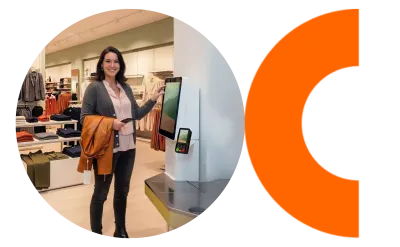
We’re only at the beginning of this revolution,” says John. “Self-service will become the standard in 2026. Customers increasingly want to check out themselves - whether it’s coffee or beer vending machines, parking, or couriers processing payments on the spot.
Self-service is no longer a gimmick, but an expectation,” he adds. “If you let customers choose where and when to pay, satisfaction rises. Those who lag behind will lose ground to competitors who offer this.
Digital wallets
By 2026, more than 60% of people will use a digital wallet, and this trend is accelerating in Belgium, with Bancontact as a central player. Customers expect to pay everywhere with their smartphone- both in-store and online.
Retailers must offer this,” says Kolthof. “Not because it sounds modern, but because customers will walk away otherwise. Wallet integration is a basic expectation. Make sure your terminal supports all services, like meal vouchers, and future innovations. A terminal must work not only today but tomorrow as well.
AI-driven payments
Virtual assistants will not only handle shopping but also manage payments. The result: fewer abandoned carts, happier customers, higher conversion, and stronger loyalty.
AI connects loose steps into one seamless experience,” explains John. “Payments follow the customer, not the other way around.
Security as a priority
All these innovations, from self-service to AI-driven payments, only work if security is guaranteed.
Electronic payments must never become a risk,” says Kolthof. “That’s why we operate under the supervision of the National Bank and continuously test our systems. Terminals that no longer meet the latest standards, such as older Yomani and Verifone models, must be replaced after nine years. It requires investment, but it’s crucial to keep payments secure.
The goal is to integrate payments subtly into the flow, but never at the expense of security,” Kolthof emphasizes. “The challenge for 2026 and beyond? Combining innovation and trust. Because the more invisible payments become, the more visible the responsibility of providers. In a world where convenience is the norm, security remains the silent condition for success.